Read this article in 中文 Français Deutsch Italiano Português Español
New Arrowhead Winch CEO is focusing on the customer

28 October 2026
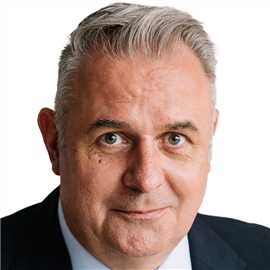
Blake Chandler, the new CEO of Arrowhead Winch, on why a customer first approach still drives every decision at the company. Mitchell Keller reports.
 Blake Chandler, Arrowhead Winch
Talk to Blake Chandler for 30 minutes and one word comes up more than any other: customer.
Not efficiency, not technology, not margins, but customer. And it shows up in how he talks about growth, about the three brands he now oversees as CEO of Arrowhead Winch and where his company should expand next.
While it’s not a novel answer for a newly appointed CEO to give, it seems in Chandler’s case a genuinely consistent one; and for a company built on decades of relationships with the crane manufacturers it supplies, that consistency might matter more than anything.
Earlier this year, Chandler was named CEO of Arrowhead Winch, the Oklahoma-based manufacturer behind the Braden, Carco and Gearmatic brands. He previously spent 20 years at WireCo, and most recently finished a stint leading the rigging business at Lift Solutions Holdings.
Arrowhead Winch was acquired by private-equity firm The Black Phoenix Group in 2024, and Chandler is now tasked with steering the company’s next chapter: three legacy brands, various markets and a growth strategy taking shape.
Crane and Transport Briefing spoke with Chandler about his new role and his vision for the company: where he sees opportunity, how he’s thinking about Arrowhead Winch’s brands going forward, and how a private equity-owned manufacturer navigates tariffs, consolidation and international growth in this environment.
You spent 20 years at WireCo and most recently led Lift Solutions’ rigging business. How do you see those experiences translating to running Arrowhead Winch?
One of the biggest things I’ve learned is the importance of staying close to the customer. In businesses like ours, you have to understand not only what customers are buying, but how they’re using the product, what problems they’re trying to solve, and what they’re going to need from you five years from now.
Any growth starts by understanding the customer.
How are you thinking about capacity and operational investment across the business as you look at growth? What are some priority markets?
A lot of that investment is going to be driven by understanding where our customers are going, and I think that’s going to dictate the direction we need to go.
We’re going to grow where we have a right to win, and where we think we can be successful. One of Arrowhead Winch’s strengths is the diversity of the end markets we serve; construction, utility, energy, forestry, marine and drilling all have different cycles and different requirements. But that diversity lets us use decades, really a century, of success that our brands have brought to those markets.
Construction is still in a very positive cycle. As we look at the crane and construction OEM space, we continue to see growth there, and that’s where we’re putting a lot of effort into new product development. We expect to see that cycle continue for the next three to five years.
We have successfully developed a line extension within our TR Series of recovery winches and have successfully launched our CH240, and we have placement with a key crane OEM starting early 2027.
How do you see the three brands – Braden, Carco and Gearmatic – going forward?
I see real value in maintaining those identities. Each of these brands has earned its reputation over decades, and that’s something we value tremendously. Braden, Carco and Gearmatic each have their own heritage in their applications and customer relationships, and we’re going to lean into that going forward.
Where do you see Arrowhead Winch in the competitive landscape as you set strategy?
I respect our competitors, but I spend more time thinking about our customers than I do our competitors, and that’s the focus we’re going to keep. I think Arrowhead Winch has a unique niche in the sense that a lot of our competitors don’t have the legacy and history in the end markets that we do, which is a real strength.
The crane OEM market is a great example. Arrowhead Winch has long-standing integrations with many of the leading crane manufacturers, and those relationships have been built over decades.
Our products are engineered into critical applications where reliability, performance and durability are essential, so becoming a trusted supplier requires much more than simply offering a competitive product.
Global expansion was a big part of your WireCo story. Is international growth part of the Arrowhead Winch plan?
North America remains extremely important to us, but we’re going to continue evaluating opportunities internationally.
Our brands already go global – we’re already out there – so we’re going to double down in areas where we see potential growth, specifically Latin America and Europe.
The European construction market has great potential for us. There are always going to be global macroeconomic headwinds, but with the construction crane and OEM market that’s there, we have a real opportunity to carve out our piece of that niche.
The Black Phoenix Group has owned Arrowhead Winch since 2024. How does that ownership structure factor into the decisions you’ll be making as CEO?
One of the things I really appreciate about The Black Phoenix Group is their alignment around building a stronger business for the long term. They recognize the value of the brands, the people and the customer relationships that have been built over decades.
From our customers’ and partners’ perspective, I don’t think ownership is going to change those fundamentals.
We don’t have an event-horizon timeline laid out the way a lot of private equity does.
Steel and component costs, tariffs, supply chain: How is Arrowhead Winch managing current headwinds?
Volatility is certainly part of the environment we’re operating in, whether it’s steel, components, freight, tariffs or geopolitical factors.
We can’t control those variables, but we can control how prepared we are for them. Ultimately, it’s our responsibility to manage those pressures in a way that lets us keep delivering the quality, service and reliability our customers expect.
Our focus has been on being proactive rather than simply passing cost increases. That means evaluating alternative sources where appropriate, strengthening our supplier base and making sure we have the right level of supply security.
A year from now, on your anniversary in the role, what do you hope to look back on?
Successfully launching the new products we have in our pipeline; that would be something we could all take real pride in.
The second thing would be progress on our international expansion and seeing a greater level of geographic diversity in the markets we serve.



CONNECT WITH THE TEAM