Read this article in 中文 Français Deutsch Italiano Português Español
The case for group rental captives

15 July 2026
Formed in 2006, Titan Specialized was created as a group rental captive serving crane, rigging and specialized carriers. Now 20 years in, its continued success offers a useful lens to examine how group rental captives function and why this structure remains relevant for certain segments of the industry.
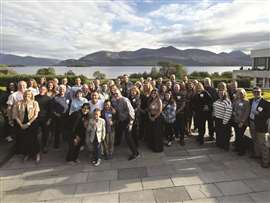 Titan Specialized members gather in Ireland to celebrate the captive insurance group’s 20th anniversary. Photo: National Interstate Insurance
At its core, a captive is an insurance company established to insure the risks of its owners or participants. Instead of transferring all risk to the traditional insurance market, participating companies retain a defined portion of that risk, allowing them to take a more active role in how losses are managed and financed.
Within the broader captive landscape, group rental captives occupy a specific niche. These programs bring together companies with similar operational profiles and risk characteristics, allowing them to pool risk while renting an existing infrastructure.
This approach can reduce administrative complexity and startup costs, while still giving participants meaningful involvement in the risk-financing process. Their effectiveness depends on consistency, strong safety performance and a willingness among participants to engage with one another.
For some crane, rigging and specialized carriers, traditional insurance can struggle to reflect the nuances of their operations. Best-in-class operators often invest heavily in training, equipment and safety systems, yet still face pricing volatility driven by broader market forces that may have little to do with their individual performance. Group rental captives offer an alternative framework.
Over time, this structure can result in more predictable costs and clearer feedback loops between safety performance and financial outcomes.
Case: Titan Specialized
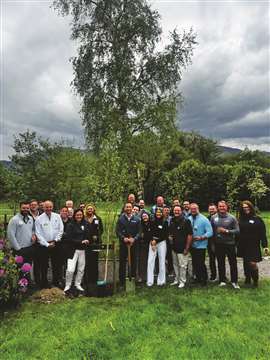 A tree planting ceremony is held in Ireland to celebrate Titan Specialized’s 20th anniversary. Photo: National Interstate Insurance
Titan Specialized group rental captive was formed in 2006 during a period of heightened volatility in the commercial insurance market, a time when many well-run operators found it difficult to secure programs that aligned with their risk profiles.
The captive was established with a clear purpose: to serve top-tier operators committed to safety and willing to take an active role in managing their risk.
Two of the most compelling aspects of this program are the potential for premium return and emphasis on member engagement. When losses are favorable, members can receive a portion of their premium back.
Additionally, members are not passive policyholders, as most are in the traditional market. At bi-annual advisory board meetings, members are expected to share best practices and take an active role in shaping the program’s direction.
Longevity (and what it means)
Today, Titan Specialized includes more than 40 member companies, and in the captive insurance space, longevity carries particular meaning.
Captives that persist across multiple insurance cycles tend to do so because their participants remain committed to the model, underwriting standards remain disciplined, and the program adapts without losing focus.
In celebration of Titan Specialized’s 20-year milestone, members came together in Killarney, Ireland, to reflect on two decades of progress and discuss what lies ahead for the group. The gathering reinforced one of the less tangible, but highly valued, benefits of a captive structure: access.
But reaching this point does not mean the absence of challenges. Titan Specialized experienced the same external pressures as the broader market. What distinguishes long-standing programs is not insulation from these forces, but a framework that allows members to respond proactively rather than reactively; and that is what drives continued success.
As the insurance landscape remains challenging, the experience of long-standing group rental captives offers several takeaways. Captives are not shortcuts around market cycles, and they are not appropriate for every organization. They require financial stability, a strong safety culture, and leadership willing to engage with industry peers.
Read more in this month’s edition of Americans Cranes & Transport magazine.
STAY CONNECTED

Receive the information you need when you need it through our world-leading magazines, newsletters and daily briefings.
CONNECT WITH THE TEAM