Read this article in 中文 Français Deutsch Italiano Português Español
5 Workforce Development Strategies to Strengthen your Crane Business
Partner Content produced by KHL Content Studio
05 May 2026
Building a workforce that grows with your operation — not just in headcount, but in capability, culture, and commitment.
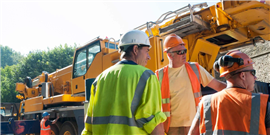
Ryan Goebel, was a crane rental project manager for 20 years and is now a software advisor with Visual Dispatch, part of the RapidWorks’ product family.
I’ve spent enough time around crane operations to know one truth: your best dispatcher, your most reliable operator, your sharpest rigger — they didn’t come from a job posting. They came from someone investing in the person who was already there.
Crane businesses face a workforce challenge unlike most industries. The stakes are high, the skills are specialized, and the margin for error is essentially zero. A crew member who isn’t properly trained, supported, or retained doesn’t just slow you down — they create liability. And yet, many operators still treat workforce development as something that happens between jobs, rather than as a strategic investment that drives the business forward.
That has to change. Here’s how the best crane operations are doing it.
Cross-Train Before You Need To
The most operationally resilient crane companies I’ve seen share one habit: they don’t wait for a gap to expose itself before they start building capability across their team.
Crane work requires precise cohesion — operators, riggers, lift directors, site supervisors, all moving from the same playbook at the same time. When any one of those roles is absent or unprepared, the whole job stops. Cross-training isn’t a nice-to-have; it’s operational insurance.
ASME and OSHA are clear about the personnel requirements for safe crane operations. What they don’t tell you is how to build a team flexible enough to meet those requirements on a job-by-job basis when people call out sick, schedules shift, or your operation grows faster than your hiring can keep up. Cross-training does.
Start by defining what you actually need people to know beyond their primary role. Build a structured program around it. Don’t ask your operators to figure it out informally — that’s how gaps persist. When cross-training is structured, it improves flexibility, reduces your dependence on any single hire, and — critically — it tells your team that you see their potential beyond their current job description.
Technology Is a Training Tool, Not Just an Operations Tool
The crane industry doesn’t have a shortage of safety standards. It has a shortage of reliable ways to keep crews current on those standards as they evolve. That’s where technology earns its place — not just in dispatch and scheduling, but in building a workforce that stays compliant and confident.
VR crane simulations, digital e-learning platforms, and structured safety distribution tools let teams practice high-stakes scenarios without putting equipment or people at risk. For a skilled-labor shortage, such as the construction and crane industries are managing right now, these tools aren’t a luxury — they’re a practical solution to the gap between the workforce you have and the workforce you need.
Beyond training, digital tools are now table stakes for managing the compliance requirements that follow every crane operation. Certification tracking, induction management, and skills verification used to live in spreadsheets and filing cabinets. Today, purpose-built software like RapidWorks’ Visual Dispatch handles it automatically — surfacing expiring certifications before they become a liability, flagging qualified crews for specific job requirements, and giving you a documented compliance trail when you need it.
The crane companies that will scale effectively over the next decade are the ones building these systems now, while it’s a competitive advantage rather than a catch-up exercise.
Referrals Are Your Most Underutilized Hiring Channel
The best crane operators know other good crane operators. That’s not a small thing.
A structured employee referral program turns your existing team into a talent pipeline. Referred candidates tend to ramp faster, stay longer, and fit the culture better than cold applications — because they’ve been pre-screened by someone who already understands what the job actually requires and what your operation actually expects.
The mechanics are straightforward: offer a meaningful incentive for successful hires, make the referral process frictionless, and communicate the program clearly to your team. The return — faster time-to-hire, lower recruiting costs, and better retention — compounds over time as your team grows and the pool of potential referrals grows with it.
Develop Leaders Before You Need Them
Growth creates a predictable crisis for crane businesses: the operation scales faster than the leadership pipeline. Suddenly the owner is dispatching, managing crews, handling customer escalations, and trying to run the business — because there’s no one else who’s been prepared to carry any of it.
The solution is to identify high-potential operators and riggers early and invest in them deliberately. That means mentorship programs that pair experienced hands with newer hires from day one. It means giving emerging leaders real responsibility before you strictly need them to have it. And it means creating a visible path forward so that your best people understand that staying with you is the right career move.
The crane industry loses experienced talent to retirement and attrition at a rate that isn’t sustainable if knowledge transfer isn’t structured. Mentorship programs are how you capture what’s in the heads of your most experienced people and make it institutional.
Ask Your Crew What’s Not Working
This is the simplest thing on this list and the most consistently skipped.
Your operators and riggers have a ground-level view of your operation that no owner or manager has. They know which equipment is being pushed past its limits, which safety procedures are being shortcut because the workflow makes them impractical, and which parts of the job create unnecessary friction. They also know what would make the work better — if anyone bothered to ask.
Structured feedback channels — whether that’s regular one-on-ones, anonymous surveys, or formal safety reviews that include field input — do two things simultaneously. They surface operational intelligence you wouldn’t otherwise have, and they signal to your team that their perspective matters. Both of those things improve retention.
The operators most likely to leave a crane company are the ones who feel invisible. The ones most likely to stay — and bring their colleagues with them — are the ones who feel heard and invested in. That’s not a soft insight. It’s a retention strategy.
The Bottom Line
The crane companies that will lead their markets over the next decade aren’t going to win on equipment alone. They’ll win because they built teams that are skilled, loyal, and capable of scaling with the business.
Cross-training, technology investment, referral programs, leadership development, and employee feedback aren’t separate initiatives. They’re a system. And like any system, it compounds: the better your training, the more your referrals improve the team, which builds a stronger leadership bench, which creates the kind of culture people talk about when they recruit you without being asked.
Start with one of these and build from there. The operators who’ve been with you for ten years didn’t stay by accident.
Learn how Visual Dispatch helps crane businesses grow smarter at rapidworks.com.
STAY CONNECTED
Receive the information you need when you need it through our world-leading magazines, newsletters and daily briefings.
CONNECT WITH THE TEAM