Read this article in 中文 Français Deutsch Italiano Português Español
Keeping cranes turning: why workforce development matters more than ever

23 September 2026
Without operators cranes won’t run and without technicians they won’t stay running. Matt Finnerty explains a growing workforce issue and offers solutions.
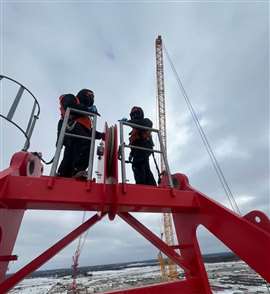 Cranes need good operators but great technicians are vital to maintain equipment safety, efficiency and minimise the dreaded spectre of downtime. Photo: Finnco Services
The crane industry often focuses on one labour issue above all others: operators.
But cranes also do not move without technicians. As a company, you can have the best operator in the world but, if the crane is down because of an electrical fault, hydraulic issue, or delayed repair, the result is the same with lost time, revenue, and frustrated clients expecting immediate results.
The real workforce challenge facing crane owners is not just a shortage of operators. It is pressure across the entire operator and technician ecosystem that impacts the world of cranes.
The cost of downtime
Every crane operation depends on two critical roles. The operators who execute lifts and manage real-time safety, and production demands. Technicians keep cranes operational by handling inspections, repairs, diagnostics, erection support, and increasingly complex electronic systems.
Without operators, cranes do not run and without technicians, cranes do not stay running.
For crane owners, the financial impact is immediate when it comes to the schedule. An idle crane can cost tens of thousands of dollars per day in delays, schedule disruption, penalties, and damaged credibility. Emergency breakdowns do not just affect equipment, they have a direct impact on the entire project. In today’s market, reliability in equipment and trust of the client is everything.
A growing labour problem
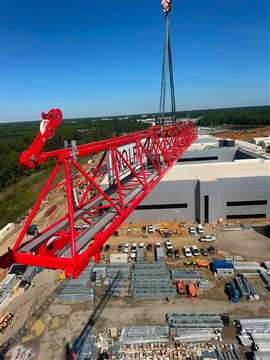 Finnco Services working on a Wolff 8033 tower crane in Clayton, North Carolina, USA. Photo: Finnco Services
The crane industry is losing experienced workers faster than it can replace them. Senior operators and veteran mechanics are retiring, taking decades of practical knowledge with them. At the same time, the skill requirements for both roles are increasing.
Operators must manage precision lifting, certifications, and high-risk decision-making. Technicians now need expertise in hydraulics, electrical systems, diagnostics, sensors, automation, and software troubleshooting which also provides a speciality along the way.
Modern cranes are no longer just mechanical machines. Today’s technician is often troubleshooting computers as much as turning wrenches. Long hours, travel demands, and constant pressure are also contributing to burnout in the field.
Many companies still operate in emergency-repair mode, creating stressful work environments that drive experienced people out of the industry. Companies concentrating on stabilising their workforce are focusing less on short-term hiring and more on long-term retention.
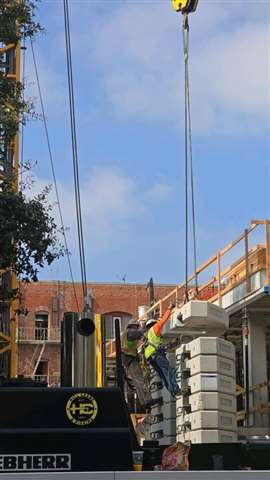 Assembling the concrete ballast slabs of a Liebherr 81.1K fast erecting tower crane in Los Angeles, California. Photo: Finnco Services
Pay skilled workers like specialists
Operators are typically compensated for the responsibility they carry but technicians are often highly undervalued despite their direct impact on uptime and profitability. As cranes become more advanced, companies must begin treating technicians as specialized technical professionals rather than general labour.
Skill-based pay structures tied to electrical, hydraulic and diagnostic expertise are becoming increasingly important to retention of these trades.
Work-life balance
Burnout is one of the biggest reasons employees leave. Rotational schedules, reduced travel demands, and preventive maintenance programmes help create more sustainable working conditions both for operators and technicians. Companies relying entirely on emergency response eventually exhaust their workforce, indicating a lack of understanding of individual value and worth.
Create career paths
People stay where they see opportunity. Operators need pathways into leadership roles such as lift director or operations management, if desired. Technicians need opportunities to advance into senior diagnostics, training, or technical management positions. Without visible growth opportunities, retention and morale suffer.
Include technicians
Technicians are often the first people to identify developing issues, yet many companies overlook their input. Organisations that include technicians in planning and operational discussions improve communication, reduce preventable failures, and build stronger teams. Respect matters just as much as compensation.
Practical solutions
The most effective crane companies are no longer waiting for the labour market to solve their staffing problems. They are building talent internally through apprenticeships, mentorships, and structured training programmes. Cross-training is also becoming a major advantage. Operators who understand equipment systems communicate better with technicians, while technicians who understand crane operation troubleshoot problems faster.
Technology is helping raise this bar as well. Remote diagnostics, camera systems, predictive maintenance tools, and smart monitoring systems reduce pressure both on operators and technicians, while improving efficiency and reducing downtime.
Just as important, companies are beginning to document repair processes and capture institutional knowledge before experienced workers retire. Losing a senior technician often means losing decades of troubleshooting experience unless that knowledge is preserved. Hence the importance of skill to skill training for those younger in the field.
Future workforce
The crane industry is changing quickly. The future workforce will likely be smaller, more technical, and more specialized. Advanced cranes will require workers who understand both operation and technology. The industry is moving toward a new kind of professional: the multiskilled crane specialist.
For crane owners, the takeaway is simple: You do not just own cranes. You operate a people business that depends on skilled operators and technicians working together. Without the right people behind the machine, even the best crane in the world is still just steel sitting still.
About the author
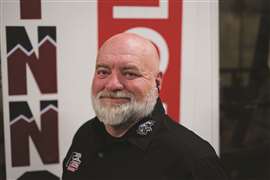 Matt Finnerty. Photo: Finnco Services
This article is based on a workforce development presentation Matt Finnerty made at the SC&RA Annual Conference in Florida, USA, in April 2026.
Family-owned Finnco Services was started in 2006. The California, USA-based business provides support services for tower cranes and construction elevators.
Finnco Services also has specialist expertise in collision-avoidance systems.
CONNECT WITH THE TEAM