Read this article in 中文 Français Deutsch Italiano Português Español
Uncertain certainty: navigating the equipment finance market

20 July 2026
Cranes, capital and the cost of uncertainty: What today’s financing climate means for new and used equipment.
As 2026 reaches the halfway mark, it is difficult to say how the next six months will play out in terms of the market for new and used cranes and the construction equipment market in general. Geopolitical forces are at play more than ever before. The war in Iran, tariffs, political policy and even a labor shortage, to name a few issues, are heavily impacting the market for buying and selling cranes.
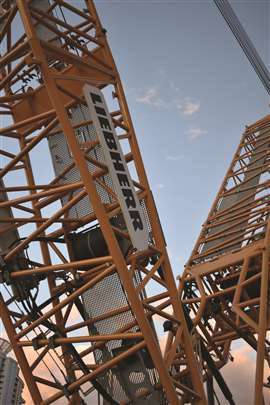 For crane buyers, the short-term narrative highlights higher, more prolonged financing costs, coupled with resilient equipment demand, according to First Financial’s Jeffrey Whitcomb.
To try to give our readers an analysis of the market and what they can expect for the second half of the year, we asked three experts in the finance industry, specifically those who specialize in financing cranes and related equipment, to answer our questions about the market.
Our panel is comprised of Tonya Fry, Harry Fry & Associates; Dan McDonough of Commercial Credit Group; and Jeffrey Whitcomb of First Financial Equipment Leasing.
The good news is that despite geopolitical uncertainty, the market has not faltered. Descriptions included “companies still have work and projects are moving forward,” “ample amount of available work and strong demand,” and “steady demand for new and used cranes.”
Read on to understand the nuances of the current new and used crane market.
How do you term the market for new and used cranes and related financing?
Fry: The crane and heavy equipment market remains cautiously optimistic. Lenders continue to have a strong appetite for cranes because of their historically strong residual values and liquidity in the secondary market. Attendance and activity at the recent Specialized Carriers & Rigging Association annual meeting reflected that companies still have work and projects are moving forward, despite some scheduling delays tied to rising costs.
Customers are taking longer to make acquisition decisions, however, as they want greater certainty around project timing and backlog before committing to additional equipment purchases. From a financing standpoint, lenders remain active in the crane and heavy equipment finance market because cranes historically retain value well and perform strongly as collateral assets. Credit has tightened on marginal transactions, though, with lenders showing less appetite for higher-risk deals.
McDonough: The market for new and used cranes and related financing remains in good shape, supported by an ample amount of available work and strong demand across the industry. The only notable challenges are the extended lead times for new machines, which currently range from six to 12 months, along with elevated new equipment pricing.
At the same time, used equipment values remain strong, reflecting healthy market conditions and sustained demand. Additionally, the lengthy delivery times and higher pricing for new machines are helping to establish a strong floor for used equipment prices. Buying used has become a popular trend for those who can find both a quality machine and a willing seller, which is a bit tricky in this market.
Financing is widely available, although traditional banks have been somewhat flat-footed recently in responding to market opportunities. Non-bank independent lenders have remained active and competitive in providing financing solutions.
Whitcomb: The ongoing blockade of the Strait of Hormuz, along with continued hostilities involving Iran, neighboring Arab states and the United States has kept upward pressure on interest rates. Since March, rates have increased by approximately 30 to 50 basis points across the yield curve.
As a result, the cost of financing or leasing both new and used cranes, as well as related aerial work platforms and transport equipment, has risen. The market remains active; however, it has become increasingly complex compared to previous years. There is steady demand for both new and used cranes, driven by infrastructure investment and ongoing construction activity. Meanwhile, supply constraints and extended lead times for new equipment are pushing more buyers toward the used market as a practical alternative.
On the financing side, there has been a noticeable shift. Customers are no longer just seeking access to capital; they are looking for flexibility and structured options. Given the scale of these investments and the current market uncertainty, equipment leasing has taken on a more strategic role, helping companies move forward while managing risk and preserving liquidity.
With inflation ticking upward and fuel prices hitting new highs, how do you envision crane sales, for both new and used equipment, playing out?
Fry: I do not believe inflation or fuel prices are currently the largest issues impacting crane sales. Tariffs are certainly creating challenges, but the labor shortage is having an even greater effect on the crane and heavy equipment industry.
Many customers have strong project pipelines and available work, but they consistently say that if they had access to more qualified operators, technicians and field personnel, they would purchase additional cranes regardless of rising equipment prices. The demand is there. The labor shortage has been a longstanding issue within the crane and heavy equipment sector and remains one of the industry’s biggest constraints to growth. Tariffs and geopolitical instability can affect equipment availability, pricing and project timing, and improvements in those areas would likely help accelerate both new and used crane sales.
However, even if tariffs were resolved and global conflicts eased, that alone would not solve the underlying workforce shortage. Labor availability remains a critical piece of the puzzle and continues to impact fleet expansion and equipment acquisition decisions across the industry.
McDonough: With demand still solid and lead times for new machines extended, new crane sales look steady in the near term. However, fuel prices and persistent inflation are likely to keep interest rates higher for longer, increasing ownership costs and potentially cooling construction activity. This may moderately slow new crane sales, though not dramatically, and could even improve lead times and delivery certainty.
 Tonya Fry, Harry Fry and Associates
At the same time, elevated input costs for steel, components, transportation and labor continue to push up new equipment prices. As a result, used equipment values follow, since they are closely tied to replacement cost on the new side. Given this dynamic, many crane operators delay major purchases and focus on maintaining their existing equipment. Companies with well-maintained fleets could be in a strong position, especially if supply constraints, input costs and lead times continue to support used equipment pricing.
Overall, if the inflationary environment persists, I see the market cooling slightly but remaining healthy, with used equipment remaining relatively resilient.
Whitcomb: Inflation and rising operating costs are definitely influencing buying behavior. At First Financial Equipment Leasing, we are observing major OEMs offering discounts to help offset higher input costs, particularly for materials and energy. Companies are becoming more deliberate with their capital decisions, which can slow purchasing cycles, especially for large, new equipment. Despite this, demand remains strong across lift equipment categories and prices for used equipment appear to be strengthening after two prolonged years of decline.
It’s important to note that demand isn’t disappearing; rather, it is shifting. We are seeing a greater interest in used equipment as a cost-effective alternative; more focus on maximizing the utilization of existing fleets; and increased reliance on financing to spread costs and protect cash flow. Current areas of momentum include major infrastructure projects, such as highways, bridges, airports, data centers and utilities. On the other hand, residential construction (both single- and multifamily) is lagging due to constrained interest rates, labor shortages and higher land and material costs.
Despite housing challenges, residential construction is not a primary demand driver for the crane industry. Consensus forecasts still indicate steady growth over the next decade:
- Overall crane market: approximately 4.2 percent CAGR (Compound Annual Growth Rate) through 2036 (according to consensus views).
- Lattice-boom crawler cranes: approximately 6.6 percent CAGR.
- All-terrain cranes: approximately 5.3 percent CAGR.
- Tower cranes are expected to follow a similar growth trajectory.
The main risks to this outlook include tariffs and the costs and complexities of onshoring production. If OEMs successfully execute their strategies, the market could remain resilient despite a higher-rate environment.
In this situation, it’s less about whether companies invest and more about how they structure those investments.
Do you expect interest rates rising, staying steady or too hard to call?
Fry: I anticipate that interest rates will remain relatively steady in the near term. Elevated oil prices tied to the ongoing Iran crisis have raised concerns about renewed inflationary pressure, particularly across energy-sensitive industries such as transportation, construction and heavy equipment.
However, recent inflation data has remained relatively benign, with core CPI increasing only modestly. In addition, the labor market has continued to show resilience, with recent job growth exceeding expectations and unemployment remaining historically low.
As a result, it appears likely that the Federal Reserve will maintain its current stance on interest rates and continue taking a ‘wait-and-see’ approach as it evaluates inflation trends, labor market conditions and broader economic uncertainty.
From a crane and heavy equipment perspective, stable interest rates would provide some support for equipment financing and capital investment decisions, although customers remain cautious due to tariffs, project timing concerns and ongoing labor shortages.
McDonough: There are really two answers: steady at the short end of the yield curve and a bias toward higher rates further out. The Federal Reserve has significant control over short-term interest rates through the Fed Funds rate, influencing SOFR (Secured Overnight Financing Rate) and the prime rate. With persistent inflation concerns, elevated energy prices and a still-solid job market, there is little reason for the Federal Reserve to shift its current stance. The current Fed Funds rate is already restrictive; further increases could negatively impact the economy. So short-term rates are likely to remain steady.
Further out on the yield curve, particularly in the five to 30-year maturities, rates are influenced less by direct Federal Reserve policy and more by market forces. Recently, they have moved noticeably higher due to concerns around embedded inflation, the level of U.S. debt and deficit and the volume of Treasury issuance. Despite the rise, long-term rates are not especially high by historical standards and could move higher, with expectations that they will remain elevated for longer on this part of the yield curve.
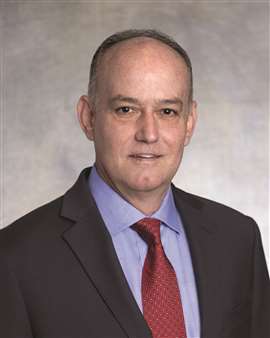 Dan McDonough, Commercial Credit Group
Whitcomb: There are many factors in play, making it difficult to predict interest rates with confidence. The Trump Administration is pursuing significant policy changes, potentially including alterations to the Federal Reserve, without much support from Congress. If these changes occur, the rate environment could shift rapidly.
Both short- and long-term rates are likely to need to decrease to encourage the investment levels required domestically and internationally. I believe that prolonged periods of ultra-low rates are unlikely to return any time soon. While we may see a more dovish stance initially under new leadership, the markets will ultimately dictate the tone.
There remains considerable uncertainty about where rates will ultimately stabilize. While some stabilization is anticipated, borrowers must understand that rates could remain elevated compared to the past several years. In practice, companies are adjusting their strategies by locking in financing when it makes sense, prioritizing predictable payment structures and seeking partners who can navigate various rate environments. Ultimately, while interest rates are an important factor, they are just one component of a broader decision-making process for capital allocation and risk management.
What are the biggest issues with crane/equipment financing RIGHT NOW?
Fry: From a tariff standpoint, banks and finance companies are generally willing to finance tariff costs for qualified borrowers by rolling those costs into the transaction. However, tariffs are fundamentally a soft cost, similar to taxes, freight and shipping expenses. By financing those costs, lenders are effectively over-advancing on the equipment relative to its underlying collateral value.
The primary concern is that if a lender were forced to repossess and liquidate the equipment, the recoverable asset value may not support the original financed amount because the tariff itself does not enhance the intrinsic value of the equipment. Additionally, if tariffs are later reduced or eliminated, portions of existing portfolios could suddenly become over-advanced and fall outside acceptable Loan-to-Value (LTV) thresholds. That creates potential portfolio risk, reserve pressure and possible compliance concerns for lenders and credit committees.
Asset valuation is another major challenge within the heavy equipment industry. Approximately 85 to 95 percent of equipment transactions occur through private-party sales or consignment channels, where pricing data is typically not publicly reported. As a result, the majority of published valuation data comes from auctions and dealer sales.
The problem is that auction data can significantly distort actual market values. In many cases, auction equipment is considered “tired” or distressed inventory and therefore sells at materially lower pricing levels. Banks and finance companies rely heavily on these published datasets, but they often are not seeing the full market picture.
Consequently, when lenders or credit analysts identify an asset value discrepancy in a submitted transaction, it frequently creates delays in the approval process because additional supporting market data must be gathered and presented to justify the valuation originally submitted with the deal.
McDonough: Some of the biggest challenges in crane and equipment financing right now center around operational and financial uncertainty. Right now, lead times for new equipment are long. This creates challenges for crane purchasers, both in project scheduling and financing. Operators often must commit to machines well in advance, without a clear understanding of delivery timelines, increasing uncertainty and complicating project scheduling.
The long lead times and a volatile interest rate environment make financing decisions even more difficult. Having clarity on financing at the time an order is placed is rare. Most lenders are not willing to hold terms for six to twelve months.
At the same time, affordability remains a concern. Equipment costs remain elevated, so customers are looking for financing structures that keep payments manageable. That often means longer loan terms or balloon structures to create payment flexibility, but those solutions must be carefully balanced against long-term financing exposure. Extended finance terms introduce the risk that the machine’s value may fall below the outstanding loan balance in the early years of ownership. This risk is amplified when there isn’t a strong pipeline of work, creating the possibility of having to sell a machine within the first few years of purchase.
Lastly, tariffs and broader supply chain pressures continue to impact pricing and equipment availability. These factors create additional unpredictability in both sale prices and financing strategies, making flexibility and creativity increasingly important in today’s market.
Whitcomb: The primary challenge currently is uncertainty and its effects on both sides of the transaction. For customers, uncertainty encompasses:
- Project timing and visibility within the pipeline
- Equipment values and availability
- Long-term costs of capital
For lenders and lessors, the focus is on balancing:
- Residual risk associated with high-value assets
- Volatility in secondary markets
- Structuring deals that are beneficial for both parties
 Jeffrey Whitcomb, First Financial Equipment Leasing, a JA Mitsui company.
Financing has shifted toward a more solution-oriented approach. Standard agreements may not suit today’s environment, making flexibility, creativity and industry expertise more essential than ever.
What are other trends/issues in equipment financing?
Fry: One of the issues that I have with equipment financing currently is more on a personal note. I am not sure some customers always understand the amount of effort that goes into a transaction we place for them. Do customers value good customer service and are they willing to pay for it? I think this question can be asked in many industries right now. The landscape is competitive. We put a great deal of work into every transaction we place to ensure that we get our customers the best deal possible and when we lose a transaction for a minimal rate difference, it always makes me ask, is my service and expertise worth that cost? Is it worth having someone that understands you and your company? Is it worth having someone that can be an advocate for you with your lender? Don’t you?
McDonough: Two come to mind: the newly reinstated bonus depreciation and the 2027 model year (and beyond) engine emissions standards.
Bonus depreciation allows for 100 percent deductibility of the purchase price of equipment. This can provide significant tax savings in the short run, but it is best viewed as pulling forward future depreciation benefits, which can lead to higher taxable income in later years of ownership. Another consideration is how long one plans to hold the asset. For example, if a newly acquired crane costs $2,000,000 and 100 percent bonus depreciation is taken, the machine is carried on the tax books at $0. If the machine is sold three years later for $1,750,000, a taxable gain of that same amount is created, resulting in a significant tax liability. Obviously, guidance from a tax professional is essential in these situations.
Another important issue for companies with heavy-haul fleets is the 2027 model-year ultra-low-NOx emissions standards. Engines from model year 2027 and beyond must comply with new regulations, will incorporate new technology and come at a higher cost. Heavy-haul operators may want to consider accelerating purchases if they are concerned about these uncertainties. However, there is a potential silver lining: if this emissions cycle follows patterns seen in previous cycles, pre-2027 trucks will retain their value longer than they otherwise would. It may make sense to double down on maintaining existing fleets while these issues sort out.
Whitcomb: One emerging theme is “Equipment as a Service,” which aligns with a broader trend seen across various industries. As automation and artificial intelligence become more integral to completing tasks, clients are increasingly asking how financing partners can help deliver outcomes rather than just provide equipment.
What automates first: Expect to see automation implemented in equipment operated by less-skilled segments of the labor market, such as articulated dump trucks and compaction equipment. Additionally, machines working in enclosed environments with no human presence are likely to adopt automation sooner.
Why cranes lag: Crane operations involve lifting people and materials, introducing greater complexity and safety requirements, especially in dynamic job-site conditions.
A realistic trajectory: While we may see AI support highly assisted operations in the near term (e.g., for tower cranes), full autonomy for most large cranes is probably more than a decade away.
For crane buyers, the short-term narrative highlights higher, more prolonged financing costs, coupled with resilient equipment demand. In the long run, there will be a gradual shift toward more service-oriented and increasingly automated equipment models. In today’s environment, equipment finance is evolving beyond mere transactional funding. It’s about forging strategic partnerships that drive success and innovation.
Panel
Tonya Fry is an owner and Vice President at Harry Fry & Associates. Tonya has 22 years of experience in the heavy equipment finance industry. Tonya brings a strategic and customer-focused approach to equipment financing. She works closely with clients throughout the funding process, helping businesses secure customized financing solutions that support growth, improve cash flow, and maximize profitability. Harry Fry & Associates is a family-owned company specializing in crane and heavy-equipment financing solutions. They have secured approximately $1.7 billion in financing over the past thirty years.
Dan McDonough is the founder, CEO and president of Commercial Credit Group (CCG). He has 40 years of experience in the construction and transportation equipment financing markets and has been instrumental in growing CCG’s crane portfolio. Commercial Credit Group is an independent equipment finance provider based in Charlotte, NC, specializing in financing for new and used equipment, equipment refinancing and working capital loans. In 22 years, CCG has financed over $500 million in cranes for companies across the U.S. and Canada.
Jeff Whitcomb is SVP for Construction and Industrial at First Financial Equipment Leasing, a JA Mitsui company. He has 28 years of experience in the construction and transportation equipment financing markets and has been instrumental in adding $230 million in new originations in the past three years. As part of the JA Mitsui Leasing family, First Financial Equipment Leasing offers the stability and resources of a global powerhouse with over $16 billion in assets.
STAY CONNECTED


Receive the information you need when you need it through our world-leading magazines, newsletters and daily briefings.
CONNECT WITH THE TEAM