Read this article in 中文 Français Deutsch Italiano Português Español
Crane and rigging education at ConExpo

19 February 2026
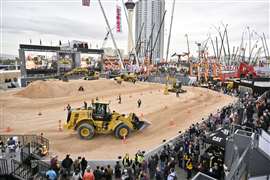 Live equipment demonstrations at ConExpo-Con/Agg show the scale, complexity and innovation shaping today’s construction and lifting operations. Photo: ConExpo-Con/Agg 2023
As the ConExpo-Con/Agg 2026 trade show in the USA approaches, education remains one of the show’s strongest value propositions.
Crane, rigging and specialized transport professionals who are having to navigate an increasingly complex operating environment can take advantage of what’s on offer. From safety and compliance to workforce development and jobsite leadership, the cranes, rigging and aerial lift educational track offers a concentrated look at the issues shaping day-to-day decision-making across the industry.
Curated by SC&RA and NCCCO Foundation, this year’s track features a dozen sessions (see sidebar below). While the speakers and perspectives span the broader construction ecosystem, the subject matter aligns closely with the priorities of SC&RA members.
While all 12 sessions have direct relevance to SC&RA’s membership and the Association’s ongoing focus on safety, compliance and professional standards, the topics show the depth of the educational offerings. Each will be led by industry professionals with first-hand experience operating in today’s regulatory and jobsite environment.
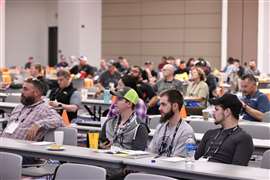 Education remains a major draw at ConExpo-Con/Agg, with SC&RA member-led sessions giving crane and transport professionals actionable guidance they can take straight back to the field.
The sessions
Eyes on Safety, presented by Colton Rhew with Buckner Heavylift Cranes, explores the real-world safety, legal and operational benefits of deploying camera systems across crane and transport fleets.
Preparing for Roadside Enforcement, presented by Chris Smith, SC&RA vice president, transportation, examines how mobile cranes are being inspected, weighed and evaluated, while outlining emerging trends operators need to anticipate.
Ground Bearing Pressure and Your Work Ticket: What Do They Have in Common? – presented by Mike Walsh at Dearborn Companies – explains why understanding ground conditions is essential to safe and compliant load handling. Walsh ties bearing pressures, underground congestion and site limitations directly to daily work ticket responsibilities.
Planning Load Handling Activities: ASME P30.1 and Its Practical Application – presented by Kevin O’Neill at Bay Crane Service – introduces attendees to the P30.1 standard and demonstrates how structured risk assessment and lift planning strengthen daily operations. O’Neill walks through categorising lifts, identifying core planning elements and applying the standard to real-world scenarios.
For SC&RA members considering attending ConExpo in Las Vegas, the crane, rigging and aerial lift track provides a targeted opportunity to gain actionable insight while engaging with peers facing similar challenges. Ultimately, the sessions underscore how informed leadership and shared best practices continue to shape safe and successful lifting operations across the industry.
Clear understanding
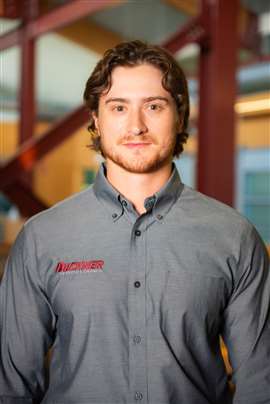 Colton Rhew at Buckner Heavylift Cranes
As to why many fleets are still hesitant to adopt cameras, Rhew believes the first and biggest reason involves internal culture and a lack of readiness. “There are a lot of younger people joining the industry, and it goes into that ‘big brother’ approach where they feel like someone is always watching them,” he indicated. “That’s the biggest misconception. What I’ve found is that, as long as you’re transparent about what you’re tracking and what you’re looking at, it helps build consistency across the fleet.”
An additional misconception Rhew has encountered is the belief cameras will automatically lower insurance costs and pay for themselves immediately. “That’s not true – you usually don’t see the ROI until later on,” he added. “The whole goal is to prevent the severity and frequency of claims. What I’ve learned is that after five years of doing this, we’ve seen both go down. It pays off over time.”
For SC&RA members attending his session, Rhew understands they are probably weighing the cost, privacy concerns and operational impacts of camera systems. “What they should understand is that this technology ultimately protects their people and their business,” he emphasised. “If you have an accident, it gets rid of the he said, she said mentality. It can exonerate both the driver and the company. In today’s world, you see a lot of insurance fraud. There’s a lot of crazy stuff on the road. That’s my main point: it helps exonerate your driver and removes the speculation.”
Another issue occurring on the road with greater regularity involves the evolution of crane equipment – which Smith will highlight in his presentation. “This session is a continuation of conversations we’ve been having with law enforcement around regulatory issues being enforced on the road and in the field, particularly as they relate to mobile crane weighing,” he said.
An issue evolving for several years, Smith noted crane technology has advanced rapidly, “… but many officers in the field are unfamiliar with our industry. They’re trained to weigh trucks and don’t always know what they’re looking at when it comes to a mobile crane.”
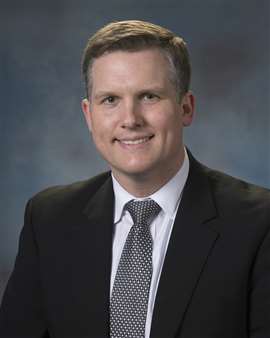 Chris Smith, SC&RA vice president, transportation
Overall, Smith’s session will give attendees a clear understanding of what to expect when moving mobile cranes through today’s regulatory environment. “I’ll be highlighting what to expect on the road from a regulatory and inspection standpoint, what SC&RA is doing to improve the process and how companies can better align themselves to move mobile cranes safely within that framework.”
Readily available
Walsh’s session on ground-bearing pressure begins with the fundamentals. “What are some things to look for? What can you expect? What do some of the terms mean?”
The goal, he explained, is twofold: reinforcing the importance of understanding ground conditions and helping companies avoid the kinds of mis-steps that lead to claims. “As one attorney told me, the best defence for a lawsuit is don’t get in one. There are things you can look at to help avoid getting into trouble and worrying about what’s on the back of the sheet.”
Asked why this topic matters even more today, Walsh pointed to the rapid escalation in lift sizes across the industry. “It’s the old ‘how big is big?’ The difference is staggering today,” he said. “But what hasn’t changed is the ground beneath those loads. You’re crowded underground and you’re crowded above – with cranes, SPMT, trailers, jack-and-slides. You’ve got a far more concentrated load being applied to the ground than ever before.”
As a result, he added, “the importance of understanding this will only continue to increase.”
 Mike Walsh, Dearborn Companies
According to O’Neill, as jobsite complexity grows, so does the need for clear standards that guide how lifts are assessed, planned and executed. “I want folks to understand there’s help out there,” he acknowledged. “One key goal of this presentation is to inform all who attend that there is a standard, and it’s readily available. You can purchase it through ASME – it’s there to help somebody who’s not really knowledgeable about the industry. Whether you’re a reviewer or a lift planner, the standard can come in very handy.”
Like Walsh, O’Neill emphasised that as projects grow heavier and more complex, structured planning becomes essential. “We’re going to show attendees a lift plan,” he said, “and how a crane makes its pick, its drop-off area, the sequence of events and the particulars you should be aware of. The code speaks about lift plans that could be verbal, could be written, could be stamped. There are different levels.”
The motivation, he added, is to help people understand the logic behind those decisions. “For companies with less formal planning processes, P30.1 provides structure. There are certain guidelines they should follow, certain people to reach out to when questions pop up – and this can help them improve their processes. It gives them the opportunity to not take all the responsibility on themselves but share it among the right people.”
Register for these and all the crane, rigging and aerial lift sessions at www.conexpoconagg.com
ConExpo-Con/Agg 2026 crane, rigging and aerial lift educational track
- Eyes on safety: enhancing mobile equipment with camera technology.
- Safe mobile crane operations in the vicinity of power lines.
- Ground bearing pressure and your work ticket, what do they have in common?
- Preparing for roadside enforcement of mobile crane and other special equipment.
- Reducing common CMV over-the-road accidents through training.
- Do you know what you’re doing? Telehandler and forklift compliance.
- Crane inspection: what you need to know about updates to B 30.5.
- What’s the difference?! Certification versus certificate versus qualification versus competence. Ensuring you’re in compliance.
- The essential role of a lift director and the responsibilities of everyone working with cranes on a jobsite.
- Rigging fundamentals – below the hook lifting.
- Smart MEWP selection: the accessories that take safety further.
- Planning load handling activities: ASME P30.1 and its practical application.
STAY CONNECTED

Receive the information you need when you need it through our world-leading magazines, newsletters and daily briefings.
CONNECT WITH THE TEAM