Ready for the infrastructure super cycle?

25 February 2026
Across Europe, Asia, the Middle East and North America, governments and private investors are mobilising capital at a scale we’ve not seen in decades.
What many are calling an infrastructure super cycle is taking shape – a sustained wave of investment that will reshape how goods and people move around the world. For SC&RA’s international membership, this isn’t abstract forecasting – it’s a call to plan, invest and adapt ahead of projects that will define the next decade, writes Joel Dandrea, SC&RA chief executive.
According to McKinsey, addressing global infrastructure requirements across key sectors could demand roughly US$106 trillion through 2040 – a number that dwarfs past cycles of spending and reflects the breadth of demand from transport to energy and beyond.
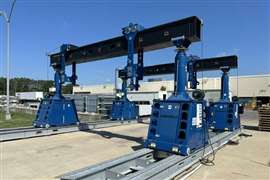
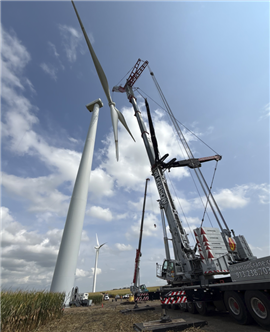 Wilkerson in the USA is one company strengthening its service capabilities and increasing its ability support major wind energy and infrastructure projects
These forces are overlapping rather than sequential. Digitalisation, decarbonisation and shifts in global trade patterns are all underwriters of this new build cycle. Private capital is being mobilised to meet them but governments and policymakers remain central to enabling delivery – especially when it comes to permitting, interconnection and public-private collaboration.
Sheer volume
In Europe, renewed infrastructure focus is evident in both private capital flows and government budgets. A record share of global private capital has flowed into European infrastructure, buoyed by commitments like Germany’s €500 billion national infrastructure fund and broader commitments to connectivity and competitiveness.
In the UK long-term infrastructure planning is gaining traction with multi-year spending strategies spanning transport, utilities and social infrastructure – and similar commitments are emerging across the EU as urban renewal and decarbonisation become policy priorities.
Asia Pacific markets continue to lead in sheer volume of activity. Events such as Expo Real Asia Pacific 2026 highlight the explosion of investment interest in real estate and infrastructure across Southeast Asia and beyond.
In the Middle East sovereign wealth funds and government initiatives are channelling capital into not only traditional transport infrastructure but also next-generation assets like AI hubs and digital networks – with investments estimated to exceed $5 trillion through 2030.
Prepare early
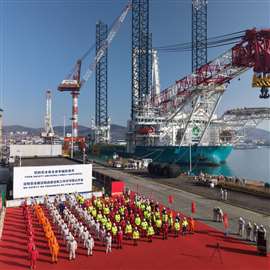 Offshore infrastructure specialist DEME Group taking delivery of its second wind turbine installation vessel, Norse Energi. Photo: DEME Group
For heavy lift providers, specialized transporters and engineered logistics firms, a global infrastructure super-cycle offers both growth and complexity. The breadth of projects – from highway megaprojects to energy transmission and digital corridors – means demand for cranes, modular logistics, precision rigging and cross-border transport will accelerate. But scale also introduces risks that must be managed.
Workforce shortages remain a reality even as activity accelerates. Recruitment and training will stay central to keeping projects staffed and schedules intact. At the same time, power constraints and supply bottlenecks – from grid limitations to long-lead equipment – can slow major data centre, transmission and renewable projects unless assets are secured and staged early.
Regulations add another layer. Permitting, cross-border rules and safety requirements vary widely, making regulatory agility as important as physical capacity in a cycle this active.
And while global capital is flowing into infrastructure at record levels, financing complexity and multi-stakeholder co-ordination mean companies with strong planning disciplines will be best positioned to win work and manage risk.
For SC&RA members, the opportunity in 2026 is to turn foresight into action: align fleet and workforce strategies, embrace technology that improves delivery performance and deepen engagement in the policy and project planning processes that shape international markets. As the world builds out the next generation of physical and digital infrastructure, the companies that prepare early will be the ones setting the pace.
STAY CONNECTED


Receive the information you need when you need it through our world-leading magazines, newsletters and daily briefings.
CONNECT WITH THE TEAM