24 September 2025
Turning cross-border challenges into relationships. Mike Chalmers reports.
In today’s cross-national megaproject landscape, crane providers must navigate currencies, cultures and compliance while also meeting demanding timelines.
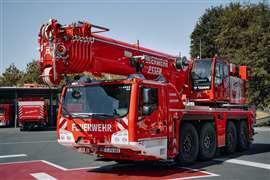
For Netherlands-based Hovago, that challenge is second nature. Specialising in renting and selling cranes worldwide, the company blends logistical precision with infrastructure expertise. From bridge builds and offshore energy to high-rise projects, Hovago says it delivers local insight with global reach.
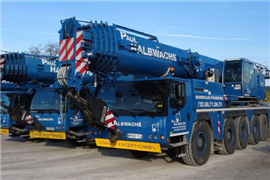
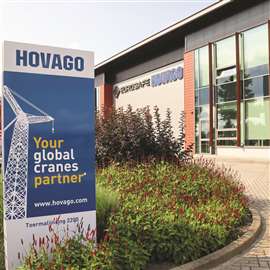 SC&RA member company Hovago is based in the Netherlands and specialises in renting and selling cranes worldwide
For SC&RA members, it’s a case study in turning international complexity into competitive advantage. As Tiemen Reitsma, international sales manager, explained, the company began in 1946 as a trading firm before evolving into a worldwide rental provider. Today, 80 per cent of its business comes from mobile crane rentals, often with a purchase option, and 20 per cent from sales. Hovago’s fleet consists of more than 200 mobile cranes ranging from 100 tonnes to 1,000 tonnes capacity.
“Our core business is really about renting high-quality mobile cranes and, by doing so, creating long-lasting relationships with our customers,” Reitsma said. “Long-term partnership is the most important thing for us.”
Establishing trust
Some customer relationships at Hovago go back more than 50 years, accomplished by sustaining relationships across second- and third-generation family businesses – vital in the close-knit crane industry, where a damaged reputation can be costly.
“If you do something wrong and lose your reputation, that becomes a big problem that hits you back,” he noted. “When we rent or sell cranes, we go a step further to ensure the customer gets it on time and with the quality they expect. If something breaks shortly after delivery, we find a solution. We always aim for the returning customer.”
According to Reitsma, reliability is one of the most important reasons people choose Hovago over competitors. “If they order a crane for rental, and it needs to be at a jobsite or a port by a certain time, they can assume it will be there,” he said.
Customer service also plays a central role. “We support and advise, and sometimes get involved in lift planning, technical support and logistics.”
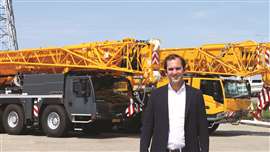 Tiemen Reitsma, Hovago international sales manager, said the company’s core business is about renting high-quality mobile cranes and, by doing so, creating long-lasting relationships with customers. “Long-term partnership is the most important thing for us,” he said
Reitsma believes the true magic is in taking the hassle and headache out of the customer’s hands – explaining that some Hovago customers are small companies who are excellent at what they do, but might not have the knowledge or resources to rent equipment from abroad and get it into their country. “That’s where we can really support our customers. We’re familiar with customs procedures, shipping lines and everything else.”
Trust and reliability are also central to Hovago’s international reputation, especially in cross-border deals and decades-long partnerships. “Two years ago, we sold a ten-year-old [Liebherr] LTM 1500 without the customer sending anyone for a technical inspection,” said Reitsma. “They’d worked with us before and knew our reputation. If there’s a defect or something wrong with the crane, we’ll take care of it. That kind of trust makes everything easier when you’re dealing with large capital investments.”
Clearing hurdles
When it comes to supporting cross-border projects, Reitsma said it all begins the moment a customer sends a rental or sales enquiry. “From there, the process begins: what’s needed to import the crane to their country? We can assist with various documentation, as well as transport permits, depending on the country.”
That said, he explained, it’s not always long-distance work. “We’re renting cranes in countries with complex importation procedures. So we explain to our customers where to go with which documents.”
The aforementioned permits are another challenge, he added. “Germany, for example, has been very tough in recent years. It’s getting better, but many cross-border moves still require going through Germany. Permits can take over three weeks – sometimes two months. With that knowledge, we can guide customers.”
For instance, he explained, for customers in Austria, Switzerland and the southern part of Germany, Hovago might suggest using a roll-on/roll-off vessel to ship a crane to southern Germany, avoiding multiple separate permits. “It saves time – and most customers don’t know these alternatives exist.”
Such challenges can mirror those faced in the USA, where uniform permitting is still a work in progress. While Germany is slowly improving, broader regulatory hurdles remain, said Reitsma, particularly regarding emission standards.
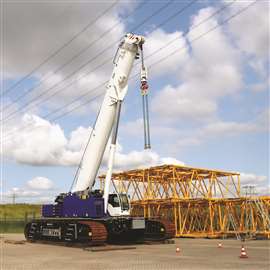 Hovago provides equipment for companies across a range of disciplines, including, but not limited to, bridge builds, offshore energy and high-rise projects
“These rules mean certain cranes, depending on age, are banned from several markets,” said Reitsma. “We address this by keeping our fleet as young and emission-friendly as possible. Currently the average age of our cranes is around four years. It’s part of our social governance strategy.
“Ultimately, we are aiming to only have cranes with the latest engine emissions. In that way, Hovago’s approach is unique in the market. Having quality cranes is vital; in our view – working with ten- or fifteen-year-old cranes would not be the right decision.”
Driving growth
Reitsma works with a diverse mix of customers – from major international crane rental companies to small family-owned crane rental companies without the financial history to secure bank credit. “For the larger companies, flexibility is often key,” he said. “With smaller or less-established customers, the focus is on risk management. What’s very important for us is that we get the right guarantees – that we’re paid on time and that they have the ability to return the cranes to us in case the market changes.”
He noted that guarantees can also be shaped by local asset protection laws. “In some cases, the customer has to import the crane, and we want to be sure local regulations still recognise us as the asset owner – not the importing party. Background checks are also standard. The crane world is small; if it doesn’t feel right, we don’t do it.”
Right now, the onshore wind installation market remains one of Hovago’s largest drivers. But Reitsma acknowledges that the market’s future is tied to renewable energy targets, infrastructure and energy. “In Europe, that’s around 2030. So, what will happen after that? Will this market dip?
Will there be no more need for the big crawler cranes?”
He also pointed to infrastructure demands across Europe and the potential for a post-war construction boom in Ukraine as possible growth drivers. “For the next five years, we’re pretty good where we are. After those five years – where we’re heading next – that is the big question.”
Take part
Interested in being featured in a future SC&RA member spotlight? Contact Lisa Grepps: [email protected]
STAY CONNECTED


Receive the information you need when you need it through our world-leading magazines, newsletters and daily briefings.
CONNECT WITH THE TEAM