Read this article in 中文 Français Deutsch Italiano Português Español
Highest bidder: assessing the used crane market

22 July 2026
Used crane demand is strong in the USA and around the world, fuelling auction activity.
When used cranes are in demand, buyers generally are attracted to live and online auctions. Convenience and expedited sales are a few advantages. If you need a crane quickly, auction companies can bring available products to you in a matter of minutes.
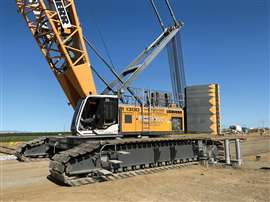 Buyers are still willing to pay strong prices for quality used cranes, according to Jeff Martin Auctioneers.
We convened a roundtable of experts from three of the largest crane auction companies to discuss the market for used cranes and other nuances related to buying and selling cranes.
Our panel includes Bryan Carr, national sales, crane and heavy transport, Jeff Martin Auctioneers; Kyle Nape, crane and rigging manager, Ritchie Bros.; and Howard Hawk, president, bidadoo Auctions.
How do you view the market for used cranes?
Carr: Highly active. Demand remains very strong for any late model, low hour crane. Buyers are still willing to pay strong prices for quality used cranes.
Nape: Demand for used cranes remains strong globally, not just in North America. Several factors are driving that demand, including longer lead times and higher costs for new equipment, ongoing project activity and rental rates in North America that continue to hold steady. Many companies are turning to the used market to secure equipment more quickly and maintain fleet flexibility.
Hawk: The pre-owned crane market is seeing strong activity in North America and globally, fueled by large-scale data centers, factory reindustrialization, infrastructure upgrades and the booming renewable energy (wind/solar) sectors. The overall crane industry, globally, is valued at US$38 billion to $55 billion and the used equipment market makes up an important, global segment of the overall market.
Remarketing of cranes has become increasingly digital, with buyers sourcing cranes nationally and internationally rather than relying only on local dealers or traditional auctions. Trust, verification and transaction support are critical given the complexity and value of crane transactions. The crane market is a truly global industry, and we often see over 30 percent of used equipment and crane sales going international.
Further, another major trend that we’re seeing is that manufacturers are significantly delayed on deliveries, which is forcing companies to utilize used cranes.
What cranes seem to be in most demand? Least demand?
Carr: Currently the 300 to 400 ton class crawlers are in very high demand, due to their current usage rate across the board. All terrain and rough terrain cranes are still a close runner up.
Nape: Late-model cranes across most categories remain in high demand, particularly larger rough-terrain cranes, all terrain cranes and mid-size to large crawler cranes. Demand has been softer for friction crawler cranes and lattice boom truck cranes compared to other segments of the market.
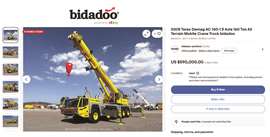 Remarketing of cranes has become increasingly digital, with buyers sourcing cranes nationally and internationally rather than relying only on local dealers or traditional auctions, according to bidadoo.
Hawk: Specifically, the demand for crawlers that are 250 tons and larger has brought buyers back to used machines to complete jobs. Over the last few years, these older, large-capacity cranes were not selling unless the price was exceptionally low. However, in the last few months, as it has become clear that new units won’t be available for 1.5 years or more, the market for these older cranes has seen a significant revival.
We continue to see strong demand for late-model all-terrain cranes, rough terrain cranes, boom crane trucks, utility and infrastructure-support cranes and smaller and mid-size crawler cranes. Buyers are looking for cranes that can go directly to work, have lower operating hours – or at least a strong ownership and maintenance story to tell – and are supported by solid OEM parts and service networks.
The softer areas of the market tend to be older or highly specialized cranes, units needing major refurbishment, cranes with limited domestic demand and very large cranes with expensive transportation and mobilization requirements. That said, some of these softer domestic categories can still generate strong global demand when exposed to the right international buyer audience.
How do you characterize the market for cranes that are being sold through auctions? Through brokers?
Carr: Specialized crane auctions have proven to be extremely effective when a seller has a defined timeline. Dedicated crane auctions will bring a large global audience to competitively bid on assets and can drive values over what the seller was expecting. However, most of your audience would be surprised about how many units that we sell outside of an auction. It is nothing out of the ordinary for us to sell a late model crane on the day it was consigned by making a few phone calls.
Nape: For companies looking to buy or sell cranes, full-service auction companies like Ritchie Bros. offer several advantages. We manage the entire transaction process, including inspections, marketing, buyer qualification, payment handling and logistics co-ordination, which helps simplify the experience for both buyers and sellers.
We also offer multiple selling channels, including traditional unreserved, onsite and offsite auctions as well as Marketplace-E, which allows sellers to set reserve pricing and maintain greater control over the sale process. In addition, we can offer guarantees, buyouts and trade-in options tied to equipment purchases.
Hawk: The market has evolved significantly toward digital remarketing and online transactions. Traditional brokers still play an important role, particularly for highly specialized negotiated sales. But buyers today increasingly expect transparency, detailed equipment details, photos, video and secure transaction facilitation.
At bidadoo, everything we do is online. Sellers can often leave the crane in place and operational while buyers evaluate or arrange on-site inspections directly. That helps avoid unnecessary transportation costs, downtime and logistical
complexity before the crane is sold.
We also support multiple transaction formats depending on the asset and seller goals, including online auctions, Buy-It-Now and negotiated sales. That flexibility has become increasingly important in today’s market.
At the same time, brokers continue to play an important role in the crane industry. Many brokers specialize in sourcing specific equipment for buyers and sellers and often have the ability to pre-sell cranes through established relationships. Larger brokers may also maintain their own inventory, which can help facilitate faster transactions.
How has the auction market changed or evolved over the past year or so with tariffs now hitting the new crane market?
Carr: Tariffs continue to drive up the prices of late model used cranes.
Nape: One of the biggest shifts we’re seeing is that companies are holding onto late-model cranes longer. Rental rates remain steady and many businesses are delaying new equipment purchases until there is greater clarity around pricing and tariff impacts in both the short and long term.
As a result, a larger share of cranes coming to auction today are older units – often 15 years old or more. After softer market conditions in 2023 and 2024, pricing for those older cranes has started to rebound. Having multiple selling channels allows sellers to choose the timing and transaction structure that best aligns with their business objectives.
Hawk: Higher new equipment pricing, tariffs and long lead times have increased interest in quality used cranes.
Buyers are holding onto equipment for longer, refurbishing existing fleets and searching more broadly for available inventory. We’re also seeing more global sourcing activity as buyers expand beyond their local markets. This has reinforced the value of online marketplaces with broad reach and established buyer audiences.
What do you see as the biggest issues and concerns with the used crane market?
Carr: Many fleet owners are currently holding onto their cranes longer than usual. This will make it more difficult to find late model used cranes across the country.
Nape: One of the primary challenges is that many cranes are staying in fleets longer and accumulating significantly more operating hours. That can increase maintenance costs and wear over time. Sellers who wait too long to bring equipment to market may miss the optimal selling window, particularly if condition and usage begin to materially impact value.
Hawk: The biggest concerns today include buyer trust and condition transparency, transportation and mobilization costs, financing and interest rates, parts and service support, emissions compliance, project and availability timing uncertainty, expertise in the crane industry and whether the crane has a current certification or not.
Current certifications add more value. Trust remains one of the biggest factors in crane transactions. Buyers need confidence in the condition, maintenance history and representation of the equipment. That’s why detailed condition reports, photos, videos and experienced crane remarketing expertise are becoming increasingly important.
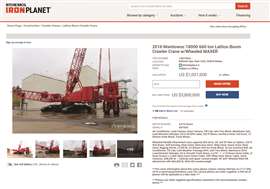 In 2025, Ritchie Bros. sold more than 2,500 cranes globally for more than $141 million.
How do you see pricing for used cranes?
Carr: Pricing for late model cranes will continue to stay steady to a tick higher. Older cranes with higher hours will continue to enter the market heavily over the next two to three years on account of many fleet owners are holding onto their cranes in hopes of seeing some type of relief from the current Tariffs.
Nape: We expect the used crane market to continue stabilizing and gradually strengthening. As tariff conditions become clearer, rental rates remain firm and more late-model cranes begin returning to the market, pricing should continue to improve at a steady pace.
Hawk: Pricing has remained relatively resilient, particularly for late-model cranes with strong maintenance histories and immediate availability.
Values continue to be supported by high replacement costs, limited quality inventory, long OEM lead times, infrastructure and energy demand and strong global buyer participation. Pricing can still vary significantly based on configuration, hours, certifications, transportation complexity and regional demand.
Are there any broader trends worth noting or something else you can say about the market?
Carr: Jeff Martin Auctioneers (held) one of its largest one owner crane auctions of 2026 in Anaheim, California, on June 16th.
Nape: The crane market continues to demonstrate strong global demand and buyer participation. In 2025, Ritchie Bros. sold more than 2,500 cranes globally for more than $141 million. Cranes and related equipment were sold across 21 countries to buyers from 68 countries, underscoring the increasingly global nature of the used equipment marketplace.
Hawk: One of the biggest long-term shifts in the crane industry is the continued movement toward digital transactions and global buyer participation. Twenty-three years ago, buying a crane online without physically attending an auction was uncommon. Today, it has become increasingly normal when buyers are provided with strong condition reports, documentation, certification verification and professional transaction support.
The future of crane remarketing will continue moving toward greater transparency, broader global reach, reduced transportation friction, flexible transaction formats and digital-first remarketing platforms. For cranes specifically, expertise matters. Understanding transportation, equipment details, certifications and real-world buyer demand is critical to achieving strong results.
STAY CONNECTED


Receive the information you need when you need it through our world-leading magazines, newsletters and daily briefings.
CONNECT WITH THE TEAM