Read this article in 中文 Français Deutsch Italiano Português Español
Uncertain certainties in 2025: the looming tariff questions

19 November 2025
SC&RA CEO Joel Dandrea looks back on 2025, discussing tariffs and other industry challenges. D.Ann Shiffler reports.
SC&RA CEO Joel Dandrea has never been someone to mince words. While he is innately polite and ever professional, he is a straight shooter who can be trusted to tell you like it is.
As editor of American Cranes & Transport, I check in with Dandrea quite often, to get his take on various industry developments, and he always provides the best insight and perspective. As we approach the end of 2025, it’s a good time to reflect on the year in terms of the lifting, rigging and specialized transportation industry.
For a broad industry evaluation, Dandrea is the perfect person to provide a rundown of what’s important. He recently marked his 25th year with SC&RA, and while he has seen a lot of progress in moving the industry forward, there are perpetually new challenges to tackle.
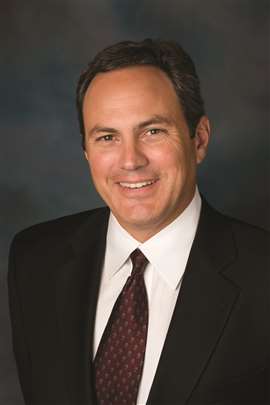 “To impose 15 percent reciprocal tariffs and 50 percent tariffs on high-strength steel not manufactured in the U.S. adds a tremendous cost and layer of complexity to doing business. It throws delays and other unintended consequences on our members.” - Joel Dandrea, CEO, Specialized Carriers & Rigging Association
Tariff turbulence
Dandrea and his team juggle a long list of issues, most of them ongoing. Tort reform, insurance availability costs, permit uniformity and automation, safety and labor are just a few. But in 2025 there was a huge new problem that has been taking air out of the room: tariffs.
In his thoughtful and often humous manner, Dandrea explained how tariffs have impacted our industry. Not one to sugar coat, Joel said that relief is going to take a lot of work.
“To impose 15 percent reciprocal tariffs and 50 percent tariffs on high-strength steel not manufactured in the U.S. adds a tremendous cost and layer of complexity to doing business,” he said. “It throws delays and other unintended consequences on our members and U.S. economic development.”
How have tariff policies affected the crane and transport industry?
For the first few months of the year, we were waiting for clarity on what the numbers and percentages would be. When the Trump Administration announced 15 percent reciprocal tariffs for the EU and Japan, this provided clarity. There was a short calm, and our industry began to understand that we are dealing with a trade imbalance and the reality that this Administration will continue to push hard on a trade reset.
But then 13 days later, the Administration announced a 50 percent tariff on steel and aluminum, and that added a whole new level of cost and complexity. High tensile steel is required for boom sections and other crane and specialized trailer components. This steel is not manufactured in the U.S. It predominantly comes out of Germany, Sweden, the Netherlands, other parts of the EU and Japan.
We need immediate relief on the Section 232 steel tariffs. Part of the reality is that the tariff policies are causing huge delays – on the manufacturing, shipping and purchase of equipment, initially. But also, all types of key construction projects are being held up. The companies that are moving forward with their acquisition of equipment are generally doing so at much higher costs.
Tariffs are adding costs, delays and causing a pause for a lot of our members. These projects include infrastructure, data centers and key pipeline energy projects, which all have been embraced by the Administration. If the equipment isn’t coming in and inventory isn’t there to meet the demands, it causes delays, adds costs and could even halt the start of some projects.
As well, the Supreme Court is taking up the issue of the constitutionality of the reciprocals. This will run well into 2026. There are lots of moving parts. We are requesting relief on the reciprocals as well as targeted products that fall within Section 232.
We are in communication with the White House, Department of Commerce, United States Trade Representative (USTR), Bureau of Industry Security and with the U.S. Congress. We are amid Capitol Hill visits with a host of our members on key committees to further communicate direct impacts and implications tariffs are having on crane and heavy transport companies.
Do you see tariff exemptions as a realistic possibility in the near term?
This is an issue that has hurt our industry collectively, and we know that we’re being heard. But are they understanding and digesting the unintended consequences? What happens when German, Japanese and U.S. manufacturers have to pay an additional 50 percent tariff on high-strength steel that’s not manufactured in the U.S? That creates havoc. And candidly, in the eyes of many folks in the industry, this favors the Chinese manufacturers who appear to be providing equipment at a much lower cost in the market.
Media reports contend that President Trump is softening some and will open negotiations on the 232 tariffs for select products not manufactured in the U.S. This is an issue that is key to economic and national security interests.
We are actively weighing in more aggressively, with more letters, more meetings and more communication to convey the realities of how these tariffs disrupt and hurt business, the manufacturing sector and construction projects.
More than ever, our collective voices and efforts of coalition partners and other associations – the U.S. Chamber of Commerce, AED, AEM, ATA, NAM and others – it finally feels like we are being heard.
Overall, would you assess that most of THE rigging and specialized transport companies have had a pretty good year?
Collectively, it’s been a good year. There is reason for cautious optimism. A couple of interest rate cuts and a resolution, or relief, on tariffs will bring momentum. And then there’s the Big Beautiful Bill.
Sure, some sectors are slow and struggling. In my 25 years here, I can say that in the strongest of times, there have been segments that have struggled. And other times, when generally the economy was down and the industry was sucking wind, there were still companies doing very well. Companies that are not leveraged and have strong balance sheets will navigate hard times more easily.
For manufacturers and buyers that are looking at 50 percent tariffs on top of reciprocal tariffs – it’s a serious struggle well beyond just the immediate costs. We are aware and sensitive to the fact that there is a reason for caution. Many of our members are cautiously optimistic, but they are delaying purchase decisions hoping for and waiting for relief on tariffs.
As the year ends, how do you term the state of the SC&RA?
The Association is definitely healthy. Member numbers are strong. Retention is solid. The new member count was the best it’s been over the last five years. Financially, we are strong. Event numbers in the last two years have continued to trend upward.
We have a lot of advocacy initiatives going on and we are making a big difference. When you look at the key indicators, all are positive. As a part of our recent strategic plan, one of our key objectives is to expand our advocacy ecosystem, and we have been doing exactly that. (See SC&RA News on page 46 highlighting SC&RA’s 2025 advocacy agenda.)
What are the biggest challenges in running an association like SC&RA?
The biggest challenge is balancing the unique and different interests, opinions and needs of a diverse group of members – crane and rigging and specialized transportation companies and the equipment manufacturers and other suppliers and service companies. While every company joins and participates collectively for the same reasons, each has a different focus and wants a different return.
We take pride in punching way above our weight, and we have a great staff that does an amazing job moving our programs forward. While there are great challenges, we see great success. There’s gratification in seeing progress being made. We don’t win all the fights, but we try and have very good partnerships with other associations and organizations that have similar interests.
In 2025 longtime affinity partner DUAL (formerly NBIS) closed. What does this mean for the insurance partnerships that SC&RA offers its members?
The insurance market continues to be hard. The exit of one company after almost 30 years of solid footing threw a challenge to us. But our existing insurance partners are working hard to come up with new options and solutions. It’s a tough environment when you lose a company like this.
In my first year at SC&RA 25 years ago, I was cornered in the back of a ballroom after a meeting by James Lomma, George Bragg, George Young and Bill Sterett. They pretty much said, ‘Hey listen kid, in this job there are going to be constant changes and challenges in the insurance arena.’ They were so right.
Our members work hard in a tough environment, doing the best they can do. Insurance and risk management are a constant concern. Nuclear verdicts don’t make it easier. Our engagement on tort reform is good but needs to be even stronger.
Looking forward, what are you optimistic about in 2026?
If we can get tariff relief and if interest rates come down, regardless of where you stand politically, there will be positives. What I’m most encouraged by is that we have an amazing and loyal membership of our Association. Our members stay in the saddle and don’t jump off the horse and panic when the going gets tough. This is a strong Association, and we are only as good as our members who actively work with us on advocacy, education, membership growth and the development and growth of our Foundation.
STAY CONNECTED


Receive the information you need when you need it through our world-leading magazines, newsletters and daily briefings.
CONNECT WITH THE TEAM