Read this article in 中文 Français Deutsch Italiano Português Español
Building common ground in lifting with ICSA

22 April 2026
Held alongside the ConExpo-Con/Agg 2026 trade show last month, a meeting of the International Crane Stakeholders Assembly (ICSA) brought together crane industry representatives from around the world to examine the issues shaping lifting operations across markets.
As a founding member of ICSA, Specialized Carriers and Rigging Association (SC&RA) joined its international counterparts in a discussion reflecting both the complexity of today’s operating environment and the growing need for cross-border alignment. From safety and standards development to workforce recognition and regulatory consistency, the meeting reinforced ICSA’s role as a collaborative platform for advancing shared industry priorities.
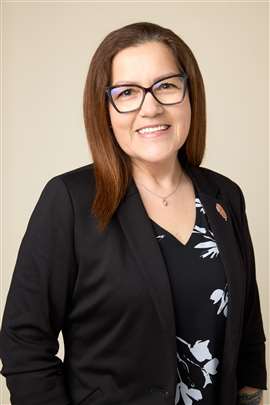
“Engagement through ICSA provides SC&RA the opportunity to share the United States’ perspective – both historical and current – on how the global crane industry is evolving, from safety and standards to workforce and regulatory priorities,” said Beth O’Quinn, SC&RA senior vice president, crane and rigging. “That perspective is critical, as it allows us not only to share our experience and knowledge with international industry counterparts, but also to translate what we’re learning into tangible value for our global membership.”
 Beth O’Quinn, SC&RA senior vice president, crane & rigging
As SC&RA continues to advocate on behalf of its members, added O’Quinn, “… insights gained from our international counterparts are invaluable as we work with the Commercial Vehicle Safety Alliance to develop guidelines for weighing mobile cranes, as well as advance ongoing permit harmonisation efforts across the United States.”
North of the US border, SC&RA has strengthened its presence in Canada, helping drive expanded engagement with provincial and territorial officials on oversize and overweight issues. In 2025 these joint efforts with CCRA (Canadian Crane Rental Association) contributed to a dedicated, expanded forum and the launch of discussions on national permit harmonisation, aligning industry and government priorities. Together, SC&RA and CCRA also engaged directly with Transport Canada to provide recommendations, supporting a co-ordinated strategy that advances both organisations’ goals.
That said, ICSA members are also focused on addressing the future of the industry’s workforce – from attracting and retaining talent to educating the next generation about career opportunities. The Specialized Carriers & Rigging Foundation (SC&RF) recently completed two research projects addressing this, which were shared with the Association’s international partners to support global workforce development efforts.
Valuable insight
Progress being what it is, technology advances in the crane industry highlight the growing need for technical exchanges between overseas organisations. According to Katsuki Yamagata, technical assessor with the Japan Crane Association (JCA), “Ongoing technical exchange and standardisation efforts remain central to both national safety objectives and broader international collaboration.”
Yamagata believes, for JCA, “Participation in ICSA serves as a valuable source of information on global industry trends, and provides visibility into global developments and emerging best practices.”
Supporting that thinking is JCA’s internal technical framework, he added. “JCA has established a permanent Technical Committee that conducts research and surveys on crane structure, operation, maintenance and other related topics. The results of this work are published as Japan Crane Association Standards (JCAS).”
Similarly, an emphasis on collaboration is a key priority of the Crane Industry Council of Australia (CICA). “Overall, ICSA has been a wonderful network to lean on for information sharing,” said Brandon Hitch, CEO.
According to Hitch, “CICA has received valuable insight on workforce studies completed in the USA – which we are considering for our own career recruitment initiatives.”
In the area of technical guidance, he pointed to the exchange of maintenance and inspection practices, particularly where international standards are influencing how existing methods are evaluated.
“CICA has distributed the ESTA document on winch maintenance for assessing the service life of crane winches in Australia, which is highly debated in Australia as part of our major inspection criteria,” he said. “The information in the ESTA guide around oil sampling and condition monitoring is not widely used in Australia and we are striving to get industry to adopt this practice rather than disassemble the winch unnecessarily.”
He also highlighted collaboration with SC&RA and CCRA on crane weighing practices. “CICA has offered to assist SC&RA and CCRA with information sharing on historical weighing data used across several manufacturers to show how cranes have been weighed both in controlled and roadside enforcement activities in Australia.”
As Hitch noted, “CICA continues to share information on how bridge assessments are made in Australia – and also our in-house research completed over the past decades to assist CCRA with research or tactics to take with bridge engineers.”
Moreover, he emphasised, “During this particular season of CICA – with my resignation and the appointment of Patrick Cran – it is great for him to have an international cohort that he can reach out to for guidance both on crane industry matters but also industry association management.”
 Claire Bélanger-Parker, CCRA executive director
Collective benefits
As for the CCRA, said Claire Bélanger-Parker, executive director, “There are two major projects which we hope will result in important changes for our industry, and they’re inter-connected.
“Over the past several years, whenever we met with permit offices to request increases in weights and dimensions for all terrain cranes, the number-one excuse was the bridge formulas.”
She noted many of the formulas in use today are outdated and do not reflect how modern all terrain cranes distribute load. To address that gap, CCRA has partnered with academia to generate data that can support regulatory change.
“To prove our point, the CCRA has developed a partnership with the University of Alberta Civil Engineering Department,” Bélanger-Parker said. “This research will be conducted over five years, and we are into year-one. Bridge testing will begin this summer.”
Early progress is already influencing discussions at the provincial level, she underlined, adding that the scope of the project has drawn significant attention across ICSA member organisations.
Such exchange extends across Europe, where the European Association of Abnormal Road Transport and Mobile Cranes (ESTA) continues to contribute through technical guidance, regulatory engagement and member-driven research.
“ESTA performed a safety survey amongst her members during the last autumn meeting, through the end of the year,” said Ton Klijn. ESTA director, “We also published a guideline on crane hoist winch maintenance, and are currently working on a ‘Sheave Inspection’ document we hope to publish in October this year.”

On the regulatory side, Klijn pointed to meaningful progress in harmonising transport rules across Europe, while also highlighting ESTA’s work in lift planning and risk management, where guidance has already been published and made widely available – in several EU languages.
In addressing work within ICSA itself, Klijn noted both challenges and continued commitment to progress. “The Assembly’s work around the Unequal Outrigger Position guidance paper is in the initial stages,” he said. “However, we will continue the efforts of this work group to try and explain to the market what the benefits of this system can be.”
Increased Emphasis
From a manufacturer point of view, that same exchange of information plays out through standards co-ordination and regulatory awareness, where the Association of Equipment Manufacturers (AEM) participates in ICSA as part of its broader international engagement.
 Alyssa Pfarr, AEM technical co-ordinator, safety & product leadership
, noted, “For manufacturers, this forum is particularly valuable for gaining visibility into how safety, technical and regulatory topics are being discussed across regions, and for understanding how different approaches may converge or diverge over time.”
Pfarr added while ICSA does not replace formal standards-setting bodies, it plays a key role in helping stakeholders stay aligned. “The Assembly plays a complementary role by helping participants understand timelines, scope and areas of active discussion across different regions.”
She also pointed to the Assembly’s role in supporting technical collaboration through non-binding guidance. “The Unequal Outrigger Position guidance paper currently under development is one example of this type of effort.”
Over time, said Pfarr, “The Assembly has continued to evolve toward a more structured and forward-looking forum, with increased emphasis on transparency, co-ordination and constructive information-sharing. From a manufacturer perspective, maintaining this type of international dialogue remains critical, as standards and regulatory expectations continue to evolve globally.”
O’Quinn concurred. “It’s important for our industry to collaborate because it drives faster innovation and enables solutions to challenges no single country can solve alone.”
For more information on ICSA, see: www.icsa-crane.org
STAY CONNECTED


Receive the information you need when you need it through our world-leading magazines, newsletters and daily briefings.
CONNECT WITH THE TEAM